Your engineers aren’t afraid of AI. They’re afraid of becoming junior again. — Andy Kelk at AI Engineer Melbourne 2026

Your Engineers Aren't Afraid of AI. They're Afraid of Becoming Junior Again.
The conversation you'd expect when rolling out AI coding tools is straightforward. Your engineers are worried about job security. They're concerned about workflow disruption. They want to understand how this affects their career trajectory. These are legitimate concerns, and you plan to address them: nobody's getting fired, we're just trying to work better, this is going to enhance what you do.
But Andy Kelk has observed something quite different happening in the organizations actually deploying these tools. It's not job security that's driving quiet resistance. It's something more subtle and harder to fix: the realization that expertise has just been devalued.
A senior engineer with twenty years of experience has spent that entire career building mastery. They've learned how to optimize code. They've internalized design patterns. They've developed intuition about what will and won't work at scale. They've earned the respect that comes from being the person who knows how to solve hard problems. That expertise is valuable, hard-won, and genuinely useful.
Then an AI coding tool writes in thirty seconds what used to take them hours. Or days. The time differential collapses. The expertise gap narrows dramatically.
This isn't about the tool being better at programming. It's about the tool eliminating the scarcity value of accumulated knowledge. When code generation was hard, the person who could do it well was valuable. When code generation becomes trivial, being good at code generation stops mattering. The thing the engineer invested their entire career in building has just been commoditized.
And it's not even wrong. The senior engineer can still do their job. They can still architect systems, mentor others, make decisions about technology. But there's a psychological reckoning happening. The thing that made them special is no longer special. The path that took twenty years to climb has just become a ladder anyone can use.
This is especially acute in high-cost markets. Senior engineers command high salaries because they're valuable. If the difficulty of their work drops, does the salary expectation stay the same? Do they compete with junior engineers who can now work just as fast?
The response isn't typically vocal. Instead, they find reasons why the new tools don't fit their workflow—security implications, code quality concerns, the need for experienced judgment. All true, but underneath runs a deeper current: something they spent their career building has been devalued.
Organizations that navigate this well acknowledge what's actually happening. The junior-level work is getting easier. That's real. Senior engineers should lean into what still matters: architecture, mentoring, technical strategy, the things still requiring accumulated wisdom.
But this requires honesty. Pretending nothing has changed asks senior engineers to ignore what they've clearly seen. Framing it as a genuine shift in what's valuable—less code production, more judgment and architecture—means being honest about what's actually happening.
The best-case: AI tools free senior engineers from tedious work to focus where their judgment matters. The worst-case: they realize their expertise has been automated away and look elsewhere.
Which way it goes depends mostly on how organizations talk about the shift. Acknowledge the real change, and people have space to adapt. Pretend nothing changed, and they quietly start looking elsewhere.
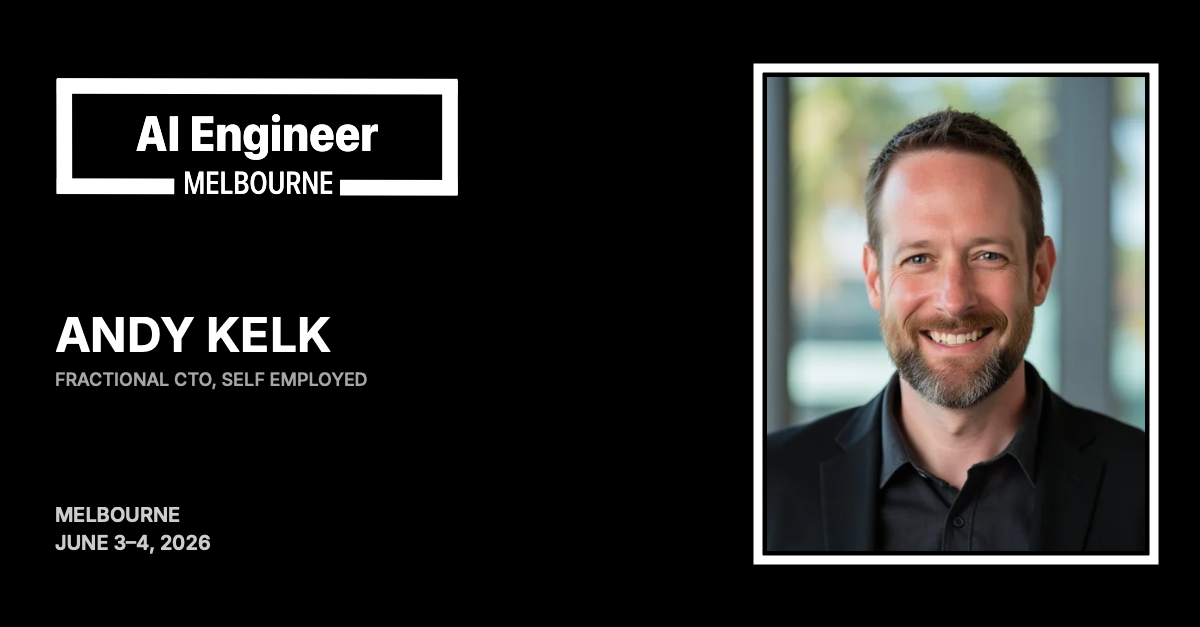
Andy Kelk is exploring exactly this dimension at AI Engineer Melbourne 2026 on June 3-4, bringing insight from twenty-five years of building and scaling technical organizations—and understanding what makes senior people actually want to stay.
Great reading, every weekend.
We round up the best writing about the web and send it your way each Friday.