Why Designers Are Accidentally Breaking Customers’ Trust in AI
For thirty years, we’ve been designing one-way USER experiences. Now we are designing two-way Human+AI experiences. We had established principles we designed 1 user experiences with - consistency, hierarchy and removing friction. We got very good at it. And now, quietly, that mastery may be the most dangerous thing we bring to AI design. Because friction, it turns out, is precisely how humans calibrate trust. That moment of slight resistance before accepting a recommendation. The pause that lets a person feel they have agency. The explanation that slows things down but makes them feel seen. We’ve been trained our entire careers to sand those moments away when the experience is based on consistency, but doing so, we’ll be building AI experiences that feel effortless, but remove users agency and but cannot be trusted.
This talk began not with research, but with regret; recognising my own work in a case study of AI harm during an ethics lecture at the London School of Economics. That discomfort became two years of asking other designers whether they recognised it too. Most did. Drawing on 240 interviews and eight frameworks built from that listening, this session invites designers to examine the most confronting possibility in their current practice.
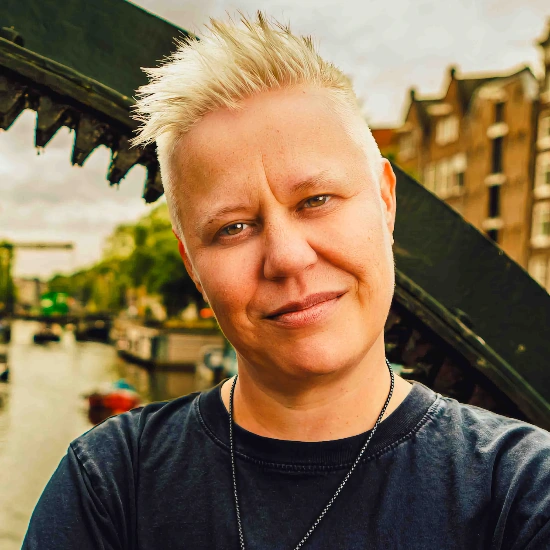
Riley Coleman
Riley is a human-centred design veteran, self confessed problem solving junkie and tech nerd. Riley started their career as service designer creating behaviour change programs for marginalised communities in the not-for-profit sector. Resulting in awards by the International Red Cross and the United Nations.
Before studying a Masters in Human-Centred Multimedia and transitioning to user experience design. Riley has spent the last 12 years working in design leadership roles, building & scaling design practices in Australia, Germany, Netherlands and Sweden.
In early 2024 Riley was sitting in a lecture during a course in London on the Ethics of AI when they had the sickening realisation that, they couldn’t hand-on-heart say, the work they’d done on 4 AI projects in the previous 8 years hadn’t caused harm, hadn’t been bias.
bold*italic*Good people with best intentions can cause systemic harm when designing for AI.bolditalic
Riley has spent the last two years learning about how to design AI that is highly capable and trustworthy. This moment later turned Riley into “an accidental founder” of AI Flywheel. Since then Riley has taught over 312 designers Human-Centred Ethical AI, as well as consulting teams on redesigning their operations for the AI era. Drawing from their extensive experience in behaviour change, human-centred design and technology transformation, they’re building a community of practice around effective Human+AI products, services and operations that people can trust.