Hardware is ready for its moment

Hardware is ready for its moment
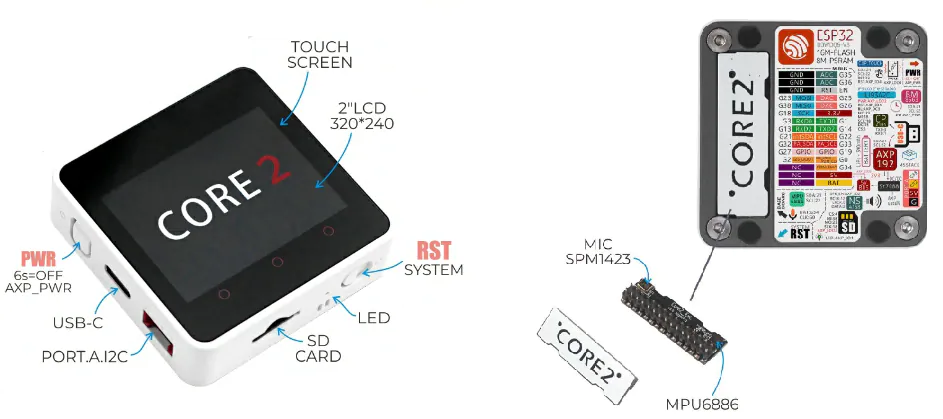
Last week, in less than a day, I programmed an M5Stack Core2 to be my personal recording assistant. I’d been using my iPhone to capture voice memos, then manually transferring the audio to my Mac and going through a series of largely manual steps to turn recordings into transcripts and ultimately summaries.
But in just a couple of hours I programmed a device with a programming language and an entire technology stack that I know next to nothing about. I integrated the hardware via Wi-Fi into my Mac ecosystem and took a process that was manual and clunky and made it effectively frictionless.
I think we’re about to see an explosion in bespoke hardware applications like this — small, purpose-built, AI-powered devices created by people who, until very recently, would never have considered themselves hardware developers. The same force that’s democratising software creation is coming for hardware. Scratch that — it’s not coming. It’s already here.
Why Hardware, Why Now
I’ve been writing recently about the explosion of software creation that’s underway. Millions of people are discovering they can build real applications by conversing with AI. Experienced software engineers are finding themselves capable of building out side projects they’ve long dreamt about in hours, not days or weeks or months.
But there’s a question that follows naturally from that: where does all this software actually live?
Most people’s digital lives happen on their phones. iPhones and Androids. And these platforms were built for an era of software scarcity. Apple charges $99 a year just to join their developer program. There’s a review process that’s both slow and arbitrary. Google just announced that from later this year, you’ll essentially need to be part of their ecosystem to deploy to Android.
And even once you are on these platforms, every update goes through the same slow, sometimes capricious, manual review cycle. If we’re about to see a hundredfold increase in the software being developed — and I think that’s conservative — these platforms have no capacity to handle it.
And it’s not just that they don’t have the capacity. They don’t want to handle it.
The web is one escape route, and I think it’s a hugely important one. But there’s another escape route that’s emerging, and it’s more radical: people like me are starting to bypass the phone entirely.
The End Run
Look at the pattern. The Bee computer. The Humane Pin. The Rabbit R1. The much rumoured and anticipated OpenAI hardware device. These are all, in different ways, attempts to create computing experiences that don’t require permission from Apple or Google.
People joked about the Pin and the R1 — oh look, yet another device that could have been an app.
But they couldn’t have been an app. Not because it’s computationally impossible, but because of the way the platforms that matter most — the phones we have with us all the time — gatekeep what runs on their devices and what interactions we as users can have with them.
I can’t say “Hey Claude” to my iPhone and just start a conversation. Apple completely mediates that relationship. It decides what I can and can’t do with the device I paid for, and it makes interacting with AI agents far harder than it needs to be. The major consumer AI companies have clearly noticed this — hence the parade of dedicated devices.
But even more interesting than any individual product: the tools to build your own have become almost trivially accessible. The hardware to experiment, explore, prototype and DIY is here. It’s relatively inexpensive and now as easy to program for as anything else.
The Maker Moment
An ESP32 board costs a few dollars. An M5Stack Core2 gives you a touchscreen, a speaker, a microphone, Wi-Fi, and Bluetooth in a package smaller than a deck of cards for $80–100. These aren’t new — the maker community has been playing with them for years. What’s new is what you can connect them to, and who can do the connecting.
A year ago, getting an ESP32 to talk to a cloud API required genuine embedded systems knowledge — C++, networking libraries, memory management. Today, you can describe what you want to an AI agent, and it will write the firmware for you. The same democratisation that’s putting app development within reach of millions of people is doing the same thing for hardware.
What matters here is scale. Something that was gated not by cost but by expertise and time no longer is. The barrier to building a purpose-specific AI device — something that listens, talks to a model, and does something useful with the response — hasn’t lowered. It’s collapsed.
Someone wants a bedside device that their elderly parent can ask questions of, without navigating a phone interface. Someone wants a workshop tool that listens to a description of a problem and suggests fixes. Someone wants a device their kid can talk to that helps with homework but doesn’t have access to social media or the rest of the internet. Each of these is now a weekend project, not a product development cycle.
From Experiments to Products
Some of these will stay experiments. But some won’t. When the cost of building a purpose-specific device drops to nearly nothing — and we’re almost there — some of those weekend projects will turn out to solve problems that lots of people share. They’ll get refined, shared, open sourced, maybe even manufactured in small runs.
We’ve seen this pattern before. The early web was full of people building things for themselves and their friends, and some of those things became products, and some of those products became industries. 3D printing went through a similar arc — from maker curiosity to rapid prototyping tool to manufacturing technique.
The difference this time is speed. AI compresses the cycle from “I have an idea” to “I have a working prototype” from months to hours. And when the prototype is a physical device that does something useful — not just an app on a screen — the possibilities multiply in ways that are hard to predict.
The Unbundling of the Phone
What I think we’re really looking at is the beginning of an unbundling of the smartphone. For fifteen years, the phone has been the universal device — the thing that does everything, mediated by two companies who decide what’s allowed. That made sense when building any kind of computing device was expensive and required deep expertise.
Over time their owners bundled everything into their platforms and zealously guarded who got access to the deeper capabilities of the platforms and how. To this day, particularly on iOS, you cannot build and deploy your own web browser. You cannot have a web app that accesses Bluetooth, or the Contacts API, or NFC, or other device APIs that have been standardised for years and are widely available on other platforms.
When building a purpose-specific device becomes cheap and easy, the argument for routing everything through a general-purpose phone — controlled by gatekeepers who can’t keep up with the pace of creation — gets a lot weaker. The smartphone was designed to make more computing more accessible in an era when access to computing was still largely a professional or advanced hobbyist activity. That era has long ended. But the fundamental philosophy of the platforms remains.
As with just about everything to do with the pace of transformation we’re seeing with LLMs and their application, I don’t know what this looks like in two or three years. But I think the combination of accessible AI, cheap programmable hardware, and the frustration of platform gatekeeping is going to produce something we haven’t seen before: a wave of small, bespoke, AI-powered devices built by people solving their own problems. And some of those solutions will turn out to be everybody’s problems.
We’re about to find out what happens when hardware gets democratised the same way software just did.
Great reading, every weekend.
We round up the best writing about the web and send it your way each Friday.